Pariatur aliqua pariatur nisi qui deserunt in velit occaecat veniam cillum irure. Non sint minim Lorem sunt eiusmod nostrud non laboris. Mollit est nulla ex nisi do aliquip reprehenderit. Voluptate ea incididunt nulla tempor commodo minim veniam culpa officia incididunt.

Pariatur aliqua pariatur nisi qui deserunt in velit occaecat veniam cillum irure. Non sint minim Lorem sunt eiusmod nostrud non laboris. Mollit est nulla ex nisi do aliquip reprehenderit. Voluptate ea incididunt nulla tempor commodo minim veniam culpa officia incididunt.
Pariatur aliqua pariatur nisi qui deserunt in velit occaecat veniam cillum irure. Non sint minim Lorem sunt eiusmod nostrud non laboris. Mollit est nulla ex nisi do aliquip reprehenderit. Voluptate ea incididunt nulla tempor commodo minim veniam culpa officia incididunt.
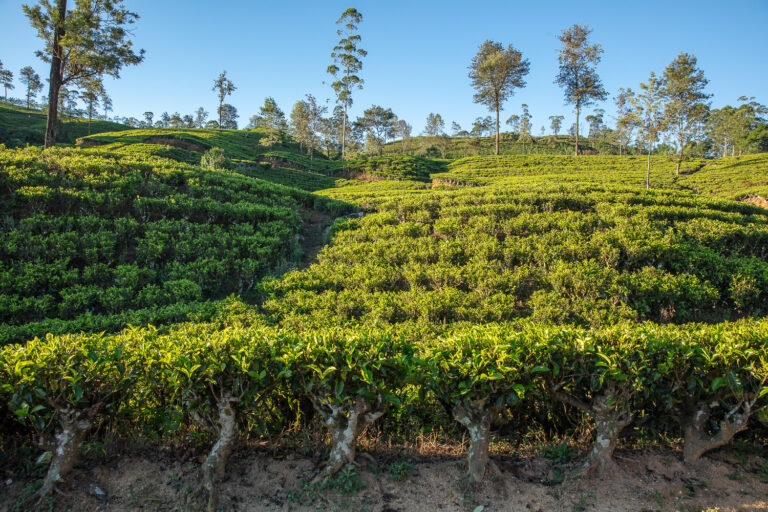
Camellia sinensis
'Camellia sinensis' is the ‘mother tea plant’. It is from ‘this tea plant/bush’ that the different variants and hybrids origins. This do need an explanation.
The tea plant has for centuries grown wild in the tropical regions of Southeast Asia including in some of southern China, Yunnan, Myanmar (Burma), Thailand, Cambodia and up to northern Assam in India.
The Swedish botanist Linnaeus was the first to categorize the tea plant taxonomy, meaning in plant names. In 1753 is the first time the tea plant is described by Linnaeus in ‘his Species Plantarum’ as ‘Thea sinensis’ on page 515 Volume 1, and duplicated in Volume 2 on page 698 BUT as ‘Camellia sinensis’.
This has given rise to some discussion as to whether there are two types of tea, namely the ‘long leaf’ variety found in Assam in Northern India and the ‘narrow leaf’ variety originally found in China.
In recent times, the plant and the flower have been studied further and down to DNA level, and it has been concluded that there is ONLY one ‘species’ namely ‘Camellia sinensis‘. The two main variants that exist are the ‘Assam’ variant and the ‘Chinese’ variant. In addition, there is also a ‘subspecies/variant’ in Cambodia. Today modern techniques down to the molecular level have found that all tea plants originate as hybrids of these three main types.
The main species that therefore exist are:
‘Camellia sinensis var sinensis’ which mainly grows in China and the rest of Asia. This is a shrub and can grow up to about 5 meters in height. (In old days when growing wild it could grow up to 30 m). This is the ‘narrow leaf’.
‘Camellia sinensis var assamica’ originally grows in northern India in the Assam area and is more of a tree than a shrub as it has a shallow trunk and can grow up to 14-18 m tall. This is the ‘long leaf’.
‘Camellia sinensis var Parvifolia’ the Cambodian tea bush. However, this is not grown commercially.
With this, we can state that there are three varieties that kind of ‘are Camellia sinensis’, which is why tea is so complex with so many different stories and hybrids, and on the more sensory level with all the flavors, notes, scents and colors, and how they are treated.
In addition to the varieties and many hybrids, the place of growth must also be taken into consideration when talking about height above the water surface, soil conditions, weather, temperature, water volumes and fog. Then, of course, the way the tea has been treated also have an impact on the tea leaves.
Many tea plantations have their own traditions for how to handle their tea bushes and tea leaves, so they get the same result every time, which sometimes can give small differences from year to year.
That’s why tea is so complex, fascinating and we find it as ‘an art form’.
We, in Emeyu, care thoroughly for the environment, and find that we have only lended the earth from our children.
The colours and moods of the beautiful landscapes that the Scandinavian countries have are our inspiration and that’s also why each tea have a name that reflects thoughts, colours and feelings from Scandinavia.
This summer why not add a fresh spin to your gin & tonic and give it a touch of empiric sky tea? In our humble opinion, empiric sky compliments gin excellently, emphasizing the tones of juniper, citrus and black pepper. The result is a super smooth and refreshing drink.
But don’t just trust us, try it for yourself and let us know what you think.
Here is how we did it:
One part good quality gin – we used Hernö Gin
One part good quality tonic – we used Fever Tree
One part cold empiric sky tea – we used 1 tea bag for 1 dl water
A slice of lemon to garnish
Start by brewing the tea (this can even be done the day before). For coldbrewing leave the infusion in the fridge for 2 hours. For hotbrewing, brew the tea for 5 min and leave to cool.
Next find a high glass and fill it with ice. Pour in the gin, top with tonic and empiric sky tea, garnish with lemon and serve!
At Emeyu we love experimenting with tea. We think it gives an unexpected sometimes healthier and always complimentary edge to many classic drinks and food recipes.
A sip of Emeyu’s Endless Summer iced tea is like a sip of summer.
Brew it cold to allow the peppermint, lemongrass, ginger and lavender to develop into a refreshing, delicious drink. Next add a touch of fresh mint, a slice of lemon and iced cubes to keep you cool and refreshed all day.
The drink is naturally caffeine free and full of dried organic herbs.
How to create the perfect iced tea
Ingredients:
2 endless summer tea bags
1,5 L water
fresh mint
fresh lemon juice
a slice of lemon
iced cubes
Optional: agave syrup to taste
How:
Add the tea bags to a large jug with water and place it in the fridge for minimum 2 hours (we like to do it overnight)
Remove the tea bags
Add iced cubes to a glass, squeeze a 1/4 lemon on top
Add the Endless Summer brew
Garnish with fresh mint and a slice of lemon
Serve 
Note: It is also possible to hot brew the tea following the normal instructions on the tea bag. Allow to cool before following the recipe above.
Make your own organic iced tea
Making your own iced tea is super easy…
Ingredients:
2 midnight sun tea bags
1,5 L water
fresh organic strawberries
freshly squeezed juice from 1/2 organic lemon
Optional: agave syrup to taste
How:
Add the tea bags to a large jug with water and place it in the fridge for minimum 2 hours (we like to do it overnight)
Remove the tea bags and add fresh strawberries and lemon juice
Serve
Tip:
Add the strawberries a couple of hours before serving for stronger natural strawberry taste.
Note: It is also possible to hot brew the tea following the normal instructions on the tea bag. Allow to cool before following the recipe above.
Supporting the UN’s Sustainable Development Goals are integral to the way we conduct our business. Specifically, we contribute to SDG 5, SDG 12 and SDG 15:
SDG 5: Gender Equality
Our biodegradable cotton tea bags are handsewn by women in a factory in Marrakesh, Morocco. We have selected this material not just for its environmental impact but also because we believe in and support the vision and philosophy of our Moroccan partner who is committed to aiding its community. The company employs mostly women in management positions and supports its largely female workforce with medical insurance and education.
SDG 12: Responsible consumption and production
One of the first things we did when we started working on the rebrand of Emeyu was to set up key criteria for production and sourcing. Quite simply these cover our commitment to organic produce, to plastic-free materials, to recyclable materials and to function. As many other businesses we recognise that this is a journey of constant improvement and we are proud of the results that we have received today. Our retail packaging is made of natural resources: responsibly sourced paper, biodegradable cotton, and bio-plast and is almost fully compostable. Our displays are locally produced and made of durable oak.
SDG 15: Life on land
Emeyu’s vision and strategy can be summarized with the line: Imagine the power of a small moment. With our small moment strategy, we want to contrast the constant interventions of modern life and remind people to take a moment to reflect, a moment to smile and a moment to focus. The ambition is to create an impact not only on the individual but also on the environment through the use and knowledge of sustainable packaging materials. Specifically, we use responsibly sourced paper (min FSC certified) for packaging and collateral, oak for our locally produced wooden displays, biodegradable cotton for our teabags and bio plast for wraps. We also aim to educate through social channels and engage with our partners in constantly searching for better solutions.
Our name Emeyu refers to the essence of tea moments.
The first part stems from the legendary Chinese tea mountain E Mei Shan. Covered in mist and cloud, clear springs, pines and flowers, it offers the perfect conditions for growing tea and is an inspiration of natural beauty and freshness. A reminder of the precious and generous world we live in.
The second part comes from the name of the ‘tea saint’, Lu Yu. This Chinese orphan perfected his tea skills under the guidance of Buddhist monks, wrote the first book on tea, became the Emperor’s favourite tea master and, after his death, became a saint to whom tea farmers still pray. Lu Yu is a by-word for perseverance, focus and attention to detail; and of course, to taste and quality.
Apple Muffins with spelt and empiric sky tea
125g organic butter
100g organic cane sugar
50g organic dark muscovado sugar
1 large organic egg
1 cup plain organic low-fat yogurt
1 cup organic spelt flour
1 cup organic plain flour
1 teaspoon organic baking powder
1 teaspoon organic baking soda
A touch of salt
2 organic apples peeled and cut in small pieces or from the garden
½ deciliter organic empiric sky tea
Topping
6 tablespoons muscovado sugar
Loose leaf tea
How to make:
Start by making the tea. Use 1 empiric sky tea bag to ½ dl water. Boil the water and pour it over the teabag. Leave to brew for 5 min.
Set the oven to 185* degrees
Mix the butter with the 2 sugars.
Add the egg and stir
Add the yogurt and the tea and stir
Mix the two flours, the baking powder, the baking soda and the salt
Mix the flour into the batter gently.
Add the apples
Pour into 12 large muffin cups
Sprinkle with muscovado sugar and tea to finish
Bake for 12-15 min
We are so proud and happy to announce that another Emeyu Tea has won a star at the estimated Great Taste Award 2019.
We also would like to use this wonderful news to wish you a wonderful Christmas month coming up. Our Empiric sky is a spicy blend, perfect for colder days leading up to Christmas.
It has a naturally sweet taste, led by a harmony of liquorice and fennel, with underlining notes of cardamom, cinnamon, ginger and pepper.
Enjoy this low caffeine tea with or without milk.
When we started working on the launch of Emeyu, we were all in agreement that ultimately, we want to create an outstanding organic and sustainable tea brand, never compromising on design or taste. We have come to realise that this ambition is a journey and we are proud of what we have accomplished to date. So far, we have improved our packaging, in order to ensure the highest levels of sustainability. Our tea bags remain 100% biodegradable, pure cotton and without any micro-plastic. Our cases and canisters are made of recyclable materials and we are currently working on transitioning to Crade-To-Cradle cases.
Great for the environment and good for you.